Montana · The recurring field year

Woodsman’s Calendar

Winter country, spring green-up, summer water and autumn ground—twelve months of field observations and preparation.

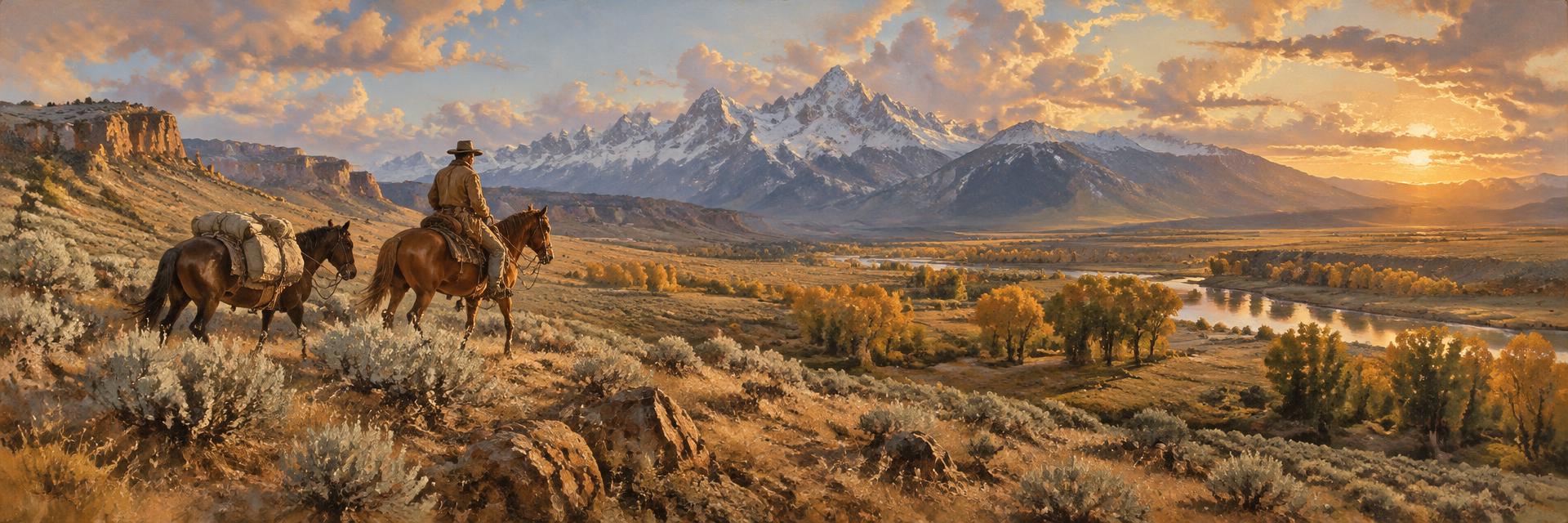
Painted panorama in the Western tradition: a rider and pack horse cross sagebrush foothills above a cottonwood river valley beneath snow-capped peaks at sunset

Montana · A recurring field-year reference. Adapted from the owner’s 2025 calendar, October 6, 2026. Natural events shift with elevation, aspect, snowpack, moisture and location. The month is a planning cue, not a season authorization or a plant-identification guide.

Before each trip: Check current Montana FWP regulations, your hunting or trapping district, the individual fishing water, quotas and closures, and the land manager’s access rules. Save those documents before leaving coverage. Dates from the original 2025 calendar are not current opening dates.

January

winter

Winter country

  • Hunting and trapping: Check remaining bird seasons, district-specific extended big-game opportunities and winter furbearer seasons. Do not assume every carry-over season ended January 1.
  • Antlers: Some deer begin shedding; many still carry antlers. Avoid displacing animals from winter range.
  • Plants and fungi: Most vegetation is dormant or snow-covered. Winter mushroom sightings are not a reliable harvest plan.
  • Fishing: Ice fishing where conditions permit; verify local ice conditions and water-specific rules.
Back to months ↑

February

winter

Watch the winter range

  • Hunting and trapping: Winter seasons may continue in particular districts; check quotas and early closures before setting out.
  • Antlers: Deer shedding becomes more noticeable. Some mature elk shed early; timing differs by age and condition. Observe from a distance and respect closures.
  • Plants and fungi: Dormancy predominates; mild spells do not mean a statewide foraging season has begun.
  • Fishing: Winter fishing continues where open. Ice conditions can change rapidly near inlets, currents and warming shorelines.
Back to months ↑

March

spring

Renew and prepare

  • Licenses and applications: Review the new FWP license year and the current application calendar; prepare deer and elk applications before their published deadline.
  • Hunting and trapping: Check remaining winter seasons and species-specific trapping closures.
  • Antlers: Deer sheds may be exposed as snow retreats; elk shedding increases into spring. Access restrictions still apply even when antlers are visible.
  • Plants and fungi: Early buttercups and green shoots may appear on warm, low-elevation sites. Mountain terrain remains wintry.
  • Fishing: Check spring rules, ice breakup and changing river flows.
Back to months ↑

April

spring

Spring begins unevenly

  • Hunting and applications: Look up current spring turkey and black bear openings. Check deer/elk application deadlines and prepare other special-species applications.
  • Trapping: Some aquatic-furbearer opportunities may remain; verify species, district and closing date.
  • Antlers: A useful month for elk-shed observations where access is open. Winter-range closures can outlast snow cover.
  • Flowers and forage: Buttercups and early balsamroot on favorable sites; morels may begin with suitable warmth and moisture. There is no dependable statewide April berry crop.
  • Fishing: Western District streams are not universally open; distinguish streams from lakes and read individual-water exceptions.
Back to months ↑

May

spring

Green-up

  • Hunting and applications: Spring turkey and bear opportunities depend on current regulations. Check moose, sheep, goat and bison application deadlines.
  • Antlers and access: Check each WMA’s opening time, access arrangements and current shed-collection requirements. An opening at one property does not open all winter range.
  • Flowers and forage: Balsamroot and other spring flowers spread uphill. Morels are a spring possibility in appropriate habitat; flowering strawberries do not necessarily mean ripe fruit.
  • Fishing: The Western District standard stream opener is the third Saturday in May, subject to exceptions; this is not a statewide opener. Check runoff and the exact water.
Back to months ↑

June

summer

Follow the snowline

  • Hunting and applications: Some spring bear seasons extend into June. Review antelope and B-license applications and separate migratory-bird and lottery deadlines.
  • Trapping and antlers: Most winter trapping is over. Deer and elk grow new antlers; older shed antlers can still be found on open land.
  • Flowers and berries: Meadows bloom as snow recedes. Wild strawberries can ripen at suitable sites; huckleberry flowering precedes its later fruit crop.
  • Forage: Morels may continue at cooler or higher sites. Learn exact plant species before gathering herbs; a common name such as “sage” is insufficient.
  • Fishing: Runoff can make rivers high and difficult; consider suitable lakes and check local conditions.
Back to months ↑

July

summer

High-country summer

  • Field preparation: Check application results, access plans and any remaining deadlines. Condition dogs during cool hours with water and rest.
  • Antlers: Velvet growth continues; this is not the usual fresh-shed period.
  • Flowers and berries: Higher-elevation bloom follows snowmelt. Serviceberries, raspberries and early huckleberries may ripen locally; habitat and moisture matter.
  • Fungi: Summer fruiting depends on rain and suitable habitat; do not plan on a guaranteed mushroom crop.
  • Fishing: Check heat-related restrictions before fishing; choose cooler water or another activity when fish are stressed.
Back to months ↑

August

summer

Berries and fall preparation

  • Hunting: Check special archery antelope opportunities and any district-specific early or shoulder seasons. Do not reuse the original calendar’s blanket “deer shoulder season” dates.
  • Access: Review current landowner permissions, BMA instructions, fire restrictions and travel conditions before scouting.
  • Antlers: Growth and velvet transition vary by species and individual.
  • Flowers and forage: Huckleberries may be productive; chokecherries begin ripening locally. Late mountain flowers and rain-dependent mushrooms are possible. Share berry habitat cautiously with bears.
  • Fishing: Low flows and warm water can trigger restrictions and closures; check the latest notices.
Back to months ↑

September

autumn

Upland and archery country

  • Hunting: Review upland bird, fall turkey, archery and migratory-bird openings by species and district. Sage-grouse opportunities and closures need particular attention.
  • Trapping: Prepare equipment and review the new season’s rules before winter openings.
  • Antlers and behavior: Elk rut activity is a fall observation; antlers are generally hardened, not shedding.
  • Flowers and forage: Later berries, chokecherries and asters may persist. Fall mushrooms depend on moisture and frost; identify every collection independently.
  • Fishing: Cooling water may improve conditions; special species and water rules still govern.
Back to months ↑

October

autumn

The fall transition

  • Hunting: Look up pheasant, antelope, youth deer and general deer/elk dates for the current year. Archery and general-season transitions differ by district and species.
  • Trapping: Check each species’ actual opening; do not infer wolf or furbearer dates from the month.
  • Antlers: Deer and elk generally retain hardened antlers.
  • Flowers and forage: Frost ends many blooms and fruiting periods. Mushrooms may persist at moist, mild sites; do not rely on a statewide late-blackberry season.
  • Fishing: Check autumn water rules, avoid disturbing spawning fish and redds, and prepare for sudden cold weather.
Back to months ↑

November

autumn

Late fall

  • Hunting: Many fall hunts remain active, but closing dates vary. Confirm big-game, upland and waterfowl rules and access for the exact location.
  • Trapping: Winter openings approach or begin for some species. Check quotas, reporting requirements and current district status.
  • Antlers and behavior: Deer rut activity can be prominent during November; do not assume the rut has already ended. Elk usually retain antlers.
  • Plants and fungi: Dormancy and freezing increasingly limit gathering.
  • Fishing: Check seasonal closures; the Western District standard stream season closes November 30, with exceptions for individual waters.
Back to months ↑

December

winter

Return to winter

  • Hunting: Check current muzzleloader heritage, extended district, upland, turkey and waterfowl opportunities. Do not treat one species’ closing date as universal.
  • Trapping: Winter furbearer seasons may be open; verify species, area, quotas and closure notices before each trip.
  • Antlers and access: Some deer start shedding late in the month; most elk shed later. Check winter-range closures and avoid pushing animals.
  • Plants and fungi: Snow and dormancy dominate; use the season to review identifications and records.
  • Fishing: Early ice is variable. Check conditions locally and follow the current rules for each lake or river.
Back to months ↑

Foraging and access notes

Flower and berry names are seasonal observations, not instructions to eat them. Positively identify the exact species and permitted collection location. Do not eat an unidentified plant or mushroom; expert identification and thorough cooking are necessary for morels, and cooking does not make poisonous mushrooms safe. Check land-manager harvest limits, permits and closures. Leave wintering wildlife undisturbed.

Current rules and source notes

Source review: October 6, 2026. These online references require connectivity; save current rules separately. This calendar deliberately omits annual opening dates and permit deadlines that would become stale.

Editorial edition: October 6, 2026 · America/Denver. Added to the library October 7, 2026. Supplied source notes retained; no new factual verification.